Start with the intervals, not the stamps
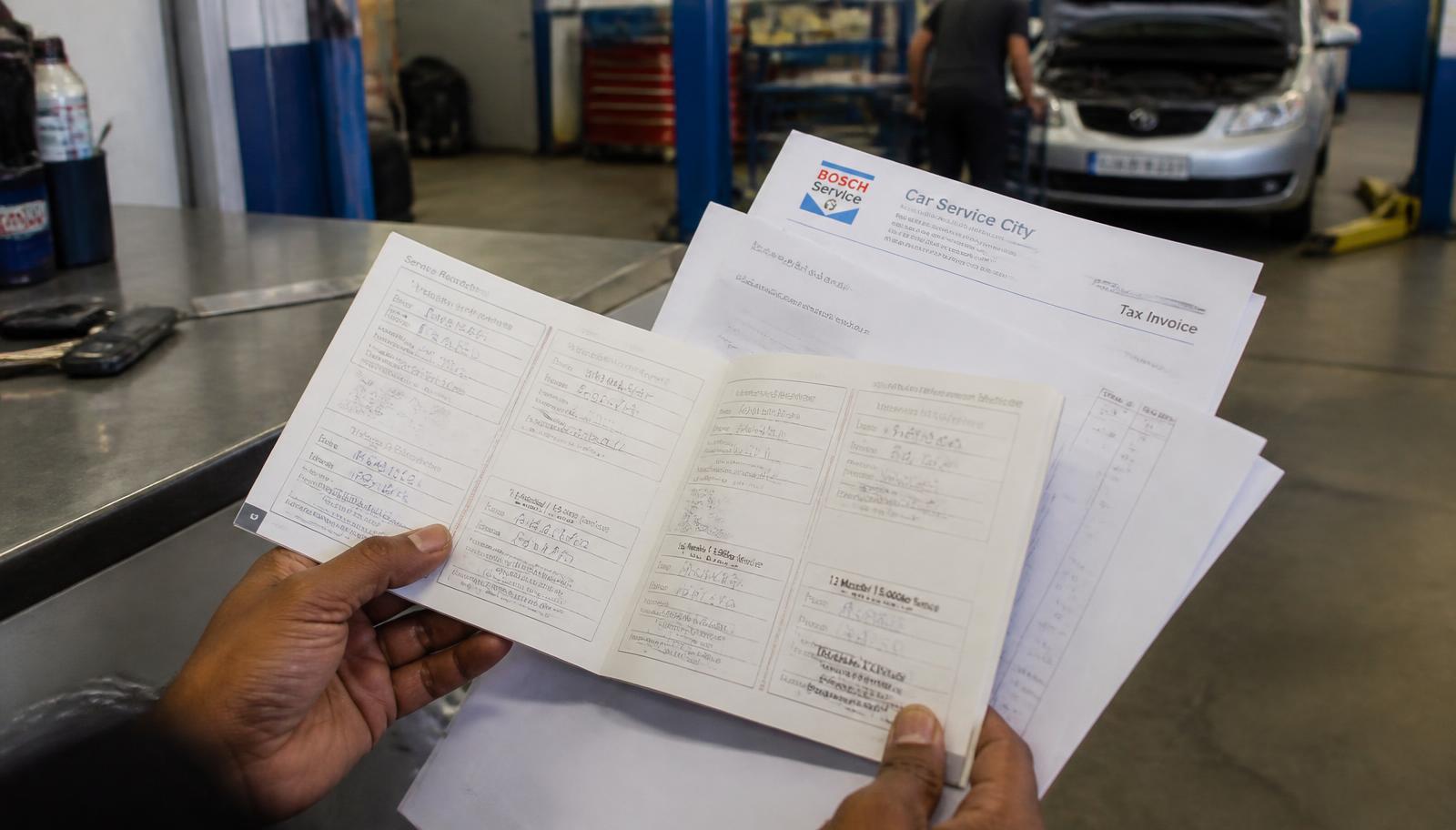
Anyone can collect stamps. What matters is whether services happened on the manufacturer's interval — in both kilometres and months. A car serviced at 15 000 km intervals when the book calls for 10 000 km has effectively skipped a third of its maintenance.
Write the dates and odometer readings in a line. Gaps and jumps show up immediately when the numbers sit next to each other.
Check that the odometer moves sensibly
A used car should accumulate 15 000 to 25 000 km a year. A record that shows 30 000 km in year one and 4 000 km in year three usually means the car changed hands or sat unused — both worth asking about.
Any reading that goes backwards, or a service invoice with a suspiciously round number, is grounds to walk away.
Read the invoices, not just the book
Ask for the actual invoices. They reveal what was replaced and what was flagged and declined. Repeated 'customer advised' notes on the same item tell you a known fault has been ignored for years.
Major items to trace: cambelt or chain work, clutch, DSG or automatic transmission service, and suspension replacements.
Franchise versus independent
Franchise history commands a premium and is easier to verify, but a well-documented independent specialist history is not a red flag — especially on older cars. What you cannot accept is undocumented home servicing on a modern turbocharged engine.
Key takeaways
- Verify intervals in both kilometres and months, not just the presence of stamps.
- Ask for invoices; declined work repeats itself and predicts your first repair bill.
- Undocumented servicing on a modern turbo engine is a walk-away signal.